Average Retatrutide Price Per Vial: What the Numbers Show
What drives the average retatrutide price per vial, why raw vial prices mislead, and how to convert listings into a comparable price-per-mg figure.
Reviewed by Marcus Webb, PhD, research pharmacologist ·
Marcus Webb, PhD is a research pharmacologist with a doctorate from Johns Hopkins University and over 12 years of experience in receptor-selective peptide analogs, bioavailability science, and the pharmacoeconomics of emerging therapeutic compounds.
- retatrutide
- pricing
- cost
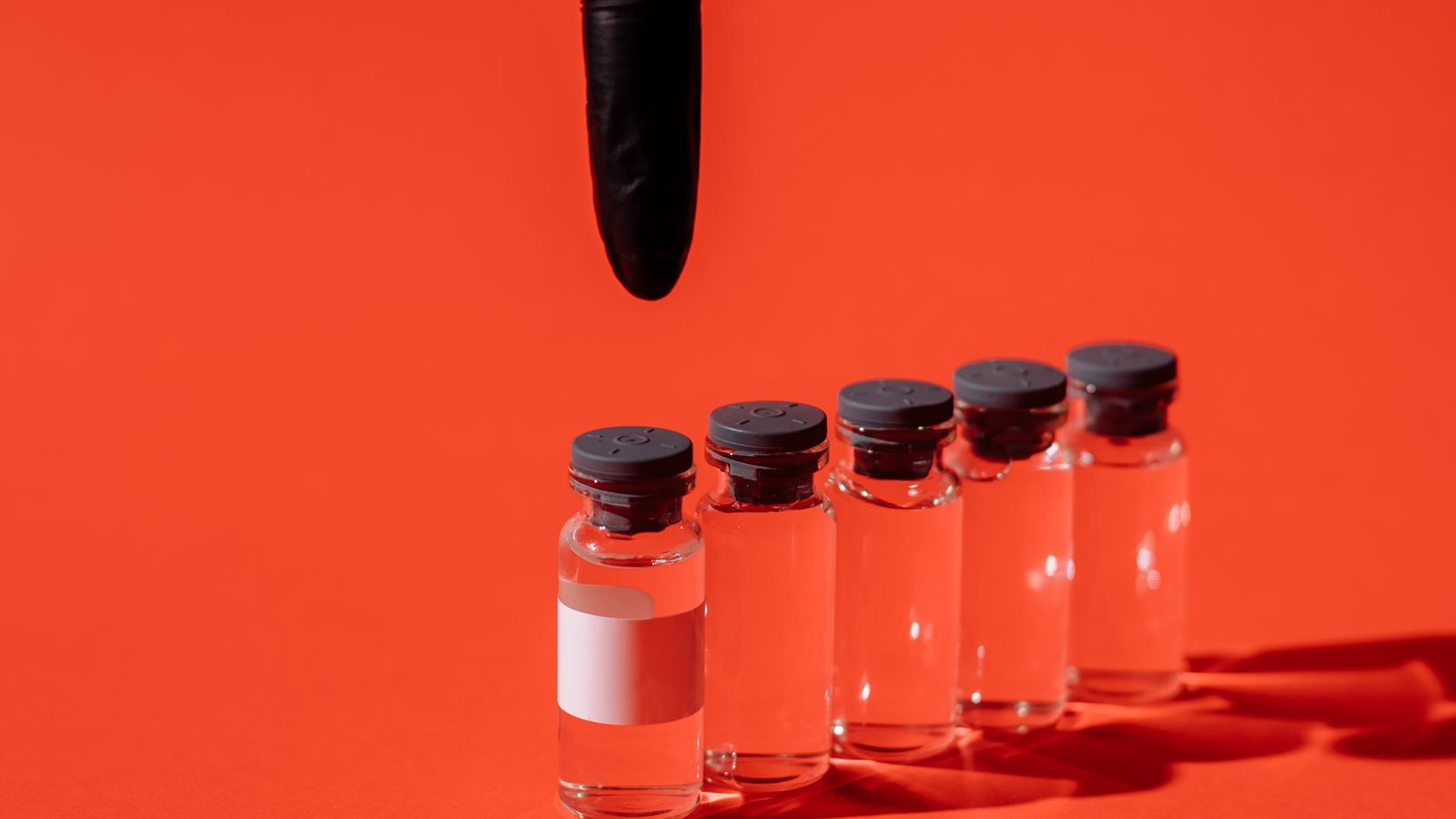
The average retatrutide price per vial varies widely across listings because “per vial” is not a fixed unit. A vial can hold 5 mg, 10 mg, 15 mg, or more, and the price tag on the outside of the box tells you almost nothing until you know what is inside it. Anyone trying to compare listings needs to look past the sticker price and get to a common denominator: cost per milligram.
Why “per vial” is a misleading comparison point
Two vials can carry the same price and completely different amounts of peptide. A supplier selling a 5 mg vial for $80 and another selling a 10 mg vial for $130 are not offering comparable deals, even though the second number looks larger. The first works out to $16 per mg; the second to $13 per mg. Averaging raw vial prices across a set of listings without accounting for mg content produces a number that looks precise but describes nothing real.
This is the core reason cost trackers and research-reference sites lean on per-milligram figures rather than per-vial averages. A per-vial average is only useful when every vial in the sample holds the same amount of compound, which is rarely true across a network of independent sellers.
What actually drives the price on a vial
A handful of variables move the price a supplier puts on a vial of retatrutide:
- Total mg content — larger vials cost more in absolute terms but usually less per mg.
- Purity and testing — vials backed by a certificate of analysis (COA) from third-party testing tend to sit at a premium over unverified listings.
- Batch size and sourcing — suppliers buying in bulk from a manufacturer can often price lower per mg than smaller resellers.
- Packaging and cold-chain handling — proper lyophilized storage and shipping add cost that shows up in the final price.
- Market demand — as with any research compound, listing prices shift with demand and available supply.
None of these factors are visible from the vial price alone, which is why a single “average price per vial” figure across a marketplace is a weak starting point for judging value.
Converting vial price into a comparable number
The calculation is straightforward: divide the listed price by the mg content stated on the vial label or COA.
Worked example: a listing shows a 10 mg vial priced at $145.
145 ÷ 10 = $14.50 per mg
A second listing shows a 15 mg vial priced at $195.
195 ÷ 15 = $13.00 per mg
Even though the second vial has a higher sticker price, it is the better value on a per-mg basis. This is the calculation worth doing before treating any “average vial price” figure as meaningful.
Sample comparison table
The table below illustrates how vial size changes the per-mg figure even when the total price looks similar. These are illustrative figures for demonstrating the calculation, not live market data.
| Vial size | Listed price | Price per mg |
|---|---|---|
| 5 mg | $80 | $16.00 |
| 10 mg | $145 | $14.50 |
| 15 mg | $195 | $13.00 |
| 20 mg | $250 | $12.50 |
The pattern in a table like this is common across the market: larger vials often carry a lower per-mg cost, up to a point, because fixed costs like packaging and shipping are spread across more compound.
Where reconstitution fits into the cost picture
Vial price only covers the lyophilized compound itself. Once bacteriostatic water is added, the concentration depends on how much diluent goes in, not on anything related to price. A 10 mg vial reconstituted with 2 mL of bacteriostatic water yields a concentration of 5 mg/mL (10 mg ÷ 2 mL = 5 mg/mL), while the same vial reconstituted with 5 mL yields 2 mg/mL (10 mg ÷ 5 mL = 2 mg/mL). More diluent lowers concentration; it does not change how much compound was purchased or what it cost. Readers working through the arithmetic in detail can cross-check figures with a reconstitution calculator.
Reading listings with the full picture
When comparing an average retatrutide price per vial across sellers, the listing’s mg content, documented purity, and any available COA all matter more than the number printed next to the currency symbol. A tracker that only records vial prices without normalizing for mg content will produce averages that swing based on which vial sizes happen to be listed that week, not on any real shift in the underlying market. For a broader view of how retatrutide is catalogued and sold, HEEZ Research maintains a product listing that shows current specifications alongside pricing. Cross-referencing catalogue detail like this against a raw price figure gives a much clearer sense of whether a listing is actually competitive.
Sites that track this compound across the research market, such as retatrutideonline.net, and calculation-focused references like glp3rt.net, each approach the same underlying question — what a given vial is actually worth — from a different angle, and comparing across a few of them tends to surface a more stable picture than relying on any single average.
Summary
An average retatrutide price per vial is only informative once it is normalized against mg content, purity documentation, and vial size. Raw price comparisons across differently sized vials produce misleading averages, while price-per-mg calculations give a stable basis for comparison. Reconstitution concentration is a separate calculation entirely, driven by diluent volume rather than cost, and worth keeping distinct when reading through listings.