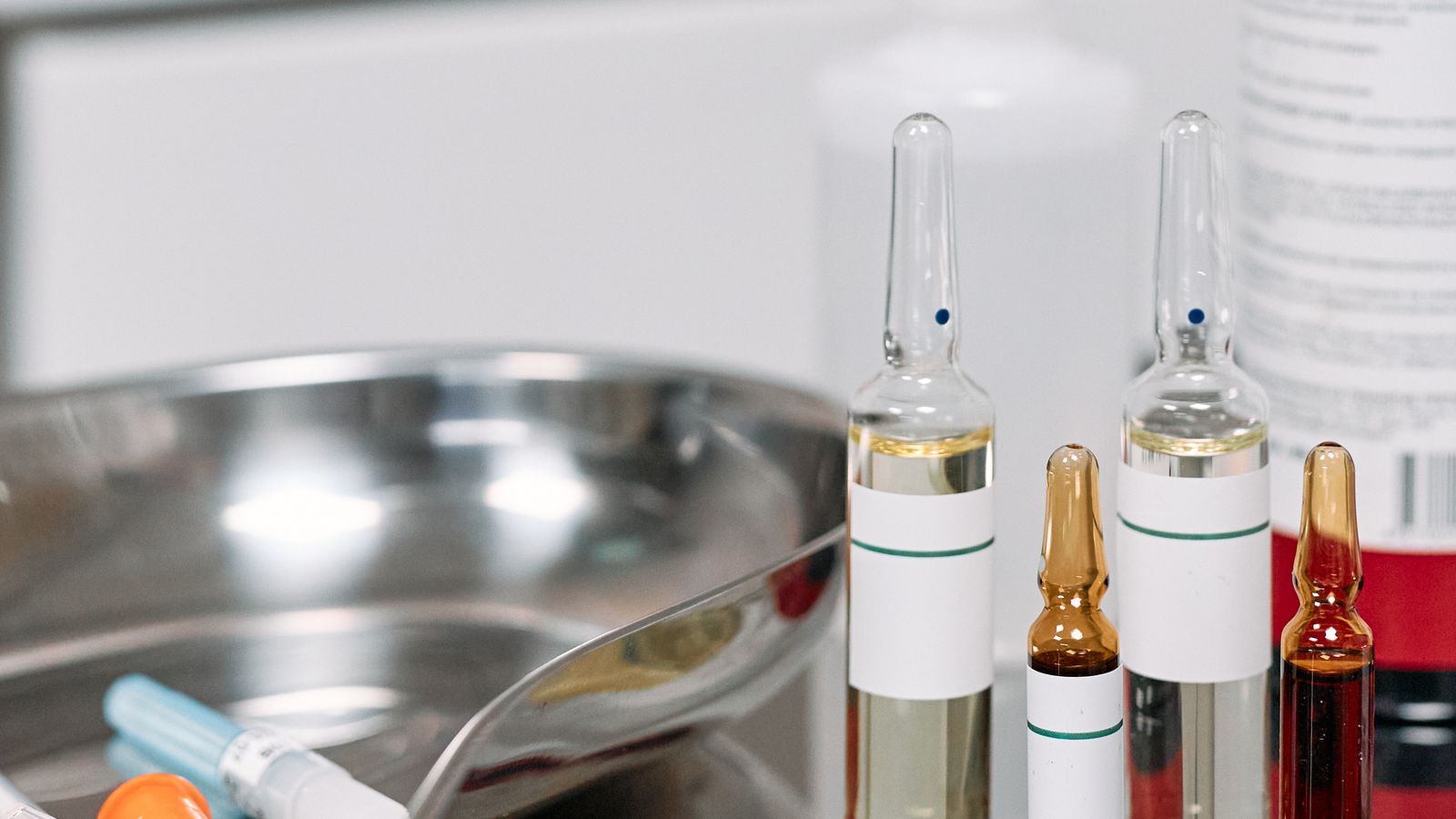
Retatrutide Cost Per Vial Comparison: How Listings Stack Up
A breakdown of how retatrutide cost per vial comparison works across listings, covering vial size, concentration, and per-milligram math for research buyers.
Reviewed by Marcus Webb, PhD, research pharmacologist ·
Marcus Webb, PhD is a research pharmacologist with a doctorate from Johns Hopkins University and over 12 years of experience in receptor-selective peptide analogs, bioavailability science, and the pharmacoeconomics of emerging therapeutic compounds.
- retatrutide
- pricing
- vial-cost
- research-reference
Comparing retatrutide cost per vial across listings only makes sense once the vial size, stated purity, and total milligram content are lined up side by side. A vial priced lower than a competitor’s can still carry a higher effective cost once the milligram count is factored in, so a raw price comparison without that context is close to meaningless.
Why Vial Price Alone Is Misleading
Suppliers package retatrutide in different total milligram amounts per vial, most commonly somewhere in the 5 mg to 20 mg range depending on the listing. A vial labeled at a lower price might contain less total peptide than a higher-priced vial from another source. Reading only the sticker price on a listing page skips the step that actually determines value: how much compound is inside the vial relative to what is being charged.
This is the core reason a retatrutide cost per vial comparison has to include a per-milligram calculation, not just a side-by-side of listed prices. Two vials at the same price point can differ substantially once divided by their labeled content.
Converting Vial Price to Cost Per Milligram
The calculation itself is simple division:
Cost per mg = vial price ÷ total mg listed on the vial
For example, a vial priced at $180 with 10 mg of labeled content works out to $18 per mg. A second listing priced at $150 but containing only 5 mg works out to $30 per mg. The second vial looks cheaper at first glance but costs more on a per-milligram basis. This is the number that belongs in any retatrutide cost per vial comparison table, not the sticker price by itself.
| Listing | Vial Price | Labeled Content | Cost per mg |
|---|---|---|---|
| A | $180 | 10 mg | $18.00 |
| B | $150 | 5 mg | $30.00 |
| C | $320 | 20 mg | $16.00 |
| D | $95 | 5 mg | $19.00 |
Sorting by cost per mg rather than sticker price changes the ranking entirely. Listing C looks the most expensive up front but is the lowest cost per milligram in this set, while Listing B looks like a budget option but is the priciest per unit of labeled content.
How Reconstitution Volume Changes the Concentration, Not the Cost
Once a vial is reconstituted with bacteriostatic water, the volume of water added changes the concentration but not the total cost of the vial or the total milligrams inside it. Concentration is calculated as vial mg divided by mL of water added.
Worked example: a 10 mg vial reconstituted with 2 mL of bacteriostatic water yields a concentration of 10 mg ÷ 2 mL = 5 mg/mL. On a U-100 insulin syringe, where 1 mL equals 100 units, that concentration means each 20-unit draw (0.2 mL) corresponds to 0.2 mL × 5 mg/mL = 1 mg, or 1000 mcg. A check on this figure: a full 100-unit draw (1 mL) of the same vial holds 1 mL × 5 mg/mL = 5 mg, and 20 units is one-fifth of that full milliliter, so one-fifth of 5 mg is 1 mg — the same result reached the first way.
The reconstitution volume a listing recommends does not change what the vial costs. It only changes how the same total milligram content is distributed across a syringe. Two identical vials reconstituted with different volumes of water will still cost the same per vial and the same per milligram; only the concentration and the volume needed per draw shift.
What Else Moves the Numbers on a Listing
A retatrutide cost per vial comparison should also account for a few structural factors that affect price without changing what’s printed on the vial label:
- Batch or bulk pricing: some listings drop the per-vial price when multiple vials are purchased together, which lowers cost per mg without changing the vial’s own concentration.
- Stated purity percentage: listings that report a purity figure alongside milligram content are describing analytical testing claims, not a guarantee that changes the arithmetic above — the mg figure on the label is still what the cost-per-mg calculation uses.
- Shipping and handling fees: these sit outside the vial price itself but affect the total amount paid, so a true cost comparison should fold them into the final per-mg number rather than treating the vial price as the complete cost.
- Currency and regional pricing differences: listings priced in different currencies need to be converted to a common unit before any comparison is valid.
Anyone cross-referencing multiple listings for research purposes benefits from checking how a given source structures its catalogue and pricing pages generally, since sourcing breadth is often a better signal of consistency than any single vial’s listed price; that kind of catalogue overview is part of what HEEZ Research documents on its site.
Building a Comparison Table From Raw Listings
To compare listings accurately, collect the same three data points for each one: vial price, labeled milligram content, and any bulk-pricing tiers. From those three inputs, cost per mg follows directly through division, and that per-mg figure is the only fair basis for ranking listings against each other. Sorting a spreadsheet by sticker price instead of cost per mg produces a ranking that has little to do with actual value.
Reconstitution details — water volume, resulting concentration, units per mg on a syringe — are separate from the pricing question. They matter for understanding a specific vial’s dilution, but they don’t change what that vial costs or how it ranks against another listing. For readers doing this math by hand, a general-purpose peptide reconstitution calculator such as peptcalc.com can double-check the concentration and per-draw figures worked out above.
Summary
A retatrutide cost per vial comparison holds up only when it moves past the sticker price and divides by labeled milligram content to get a true per-mg figure. Reconstitution volume affects concentration, not cost, and should be tracked separately from pricing. Bulk tiers, purity claims, and shipping fees all shift the effective total, so a complete comparison accounts for all of them before ranking listings against each other.